Spirometry is one of the most widely used tests to assess pulmonary function, and it plays a key role in diagnosing and monitoring various lung disorders. Simple, fast and non-invasive, this test measures the volume and speed of air a person is able to inhale and exhale.
Although this test is often associated with diagnosing asthma or Chronic Obstructive Pulmonary Disease (COPD), spirometry can be helpful in many other clinical scenarios.
Find out what it is, what it’s for, how it’s done and how to interpret the results.
Spirometry: what is it?
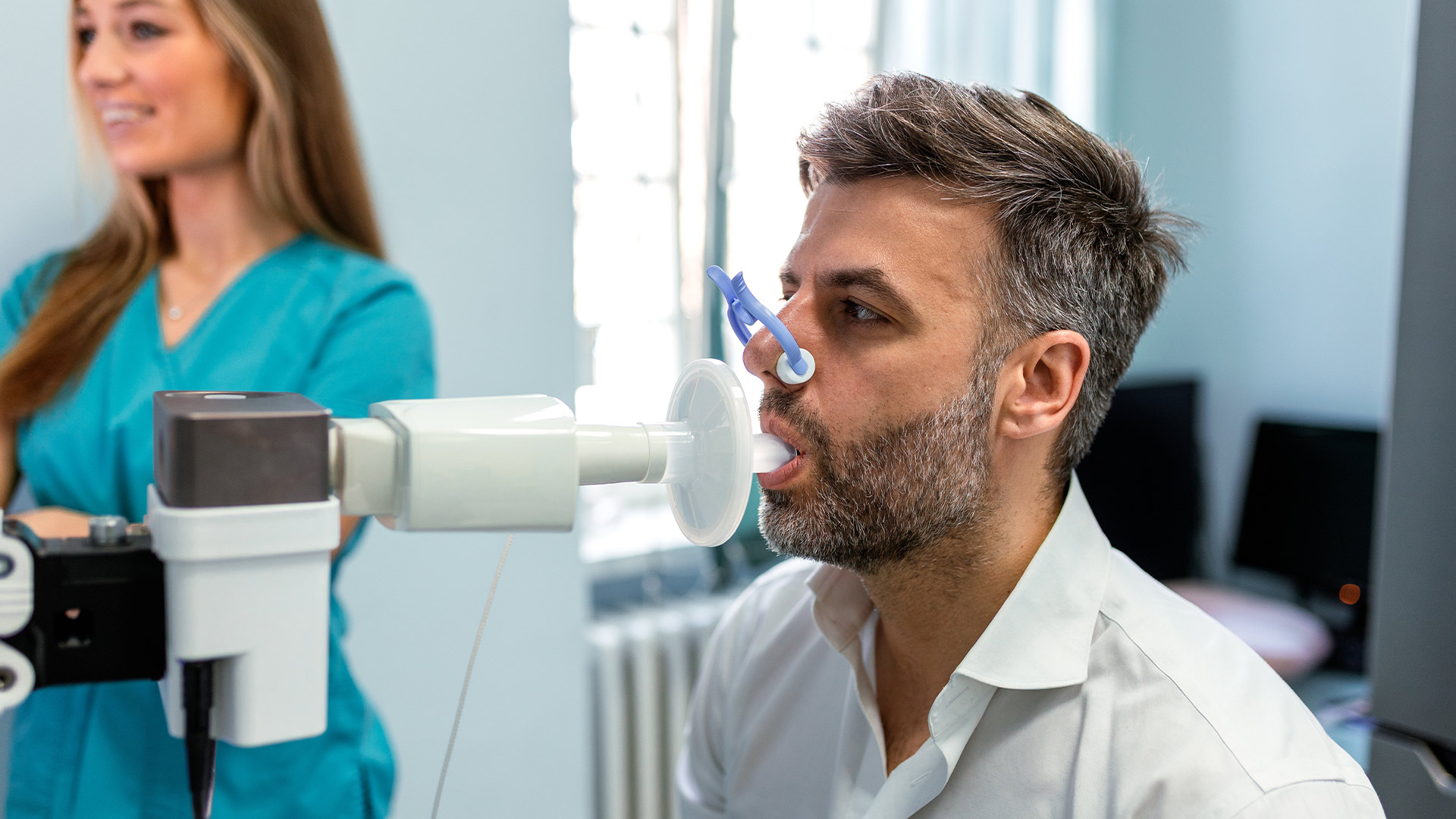
Spirometry is a diagnostic test that assesses lung capacity by measuring the volume and flow of air that is inhaled and exhaled. To perform this exam, the patient blows into a device called a spirometer, which records various parameters relating to pulmonary function. These data can detect respiratory changes that may not be apparent from symptoms or clinical examination alone.
Spirometry is considered the primary pulmonary function test to identify obstructive and restrictive patterns, two different forms of impaired lung function.
Simply put, an obstructive pattern occurs when patients experience difficulty exhaling air from the lungs, as is the case with asthma or COPD (Chronic Obstructive Pulmonary Disease). In the specific case of COPD, the diagnosis is confirmed using post-bronchodilator spirometry. In the case of a restrictive pattern, the lungs have less expansion capacity, reducing the total volume of air that a person is able to inhale. However, although spirometry helps identify or suggest changes compatible with a restrictive pattern, the restriction should be confirmed by measuring the total lung capacity.
Spirometry: what is it for?
Spirometry is used to assess lung function and help diagnose, monitor and manage various respiratory conditions.
The principal indications include:
• Diagnosing asthma;
• Diagnosing and monitoring COPD (Chronic Obstructive Pulmonary Disease);
• Assessing restrictive pulmonary diseases;
• Analysing persistent respiratory symptoms;
• Pre-operative assessment for certain surgeries;
• Monitoring the effectiveness of respiratory treatments;
• Monitoring lung function in people exposed to occupational risk factors.
Furthermore, spirometry can help detect respiratory changes at an early stage, before the onset of serious symptoms.
Simple spirometry vs. bronchodilator spirometry: what’s the difference?
There are two primary types of spirometry: simple spirometry and bronchodilator spirometry. Both tests assess pulmonary function, but they are performed differently.
Simple spirometry
Simple spirometry involves measuring lung parameters without administering any medication during the test.
This test is often the first approach used to assess symptoms such as persistent cough, shortness of breath, wheezing or chest tightness. The results help identify changes in pulmonary function and determine the need for additional studies.
Bronchodilator spirometry
In the case of bronchodilator spirometry, the test is performed in two stages. First, a simple spirometry is carried out. Next, an inhaled bronchodilator is administered — a drug that relaxes the muscles around the airways — and, following a waiting period, the test is repeated.
A comparison of these two results indicates whether there is a substantial improvement in lung function after the medication was taken. This information is particularly useful to assess asthma and distinguish between different respiratory conditions.