Coronary heart disease: what it is, symptoms, causes and treatment

Coronary heart disease: find out what it is, the symptoms, causes, risk factors, diagnosis, treatment and how to prevent cardiovascular complications.

Related Tags

  • Cardiology
Man experiencing chest pain while jogging, a possible symptom of coronary heart disease

Coronary heart disease (CHD) is one of the leading causes of illness and death worldwide. Although this condition often develops silently over several years, CHD can appear suddenly through severe events, such as acute myocardial infarction or sudden death.

Understanding what coronary heart disease is, how it develops, the warning signs and therapeutic options available, is essential to ensure an early diagnosis and the right care.


Coronary heart disease: what is it?

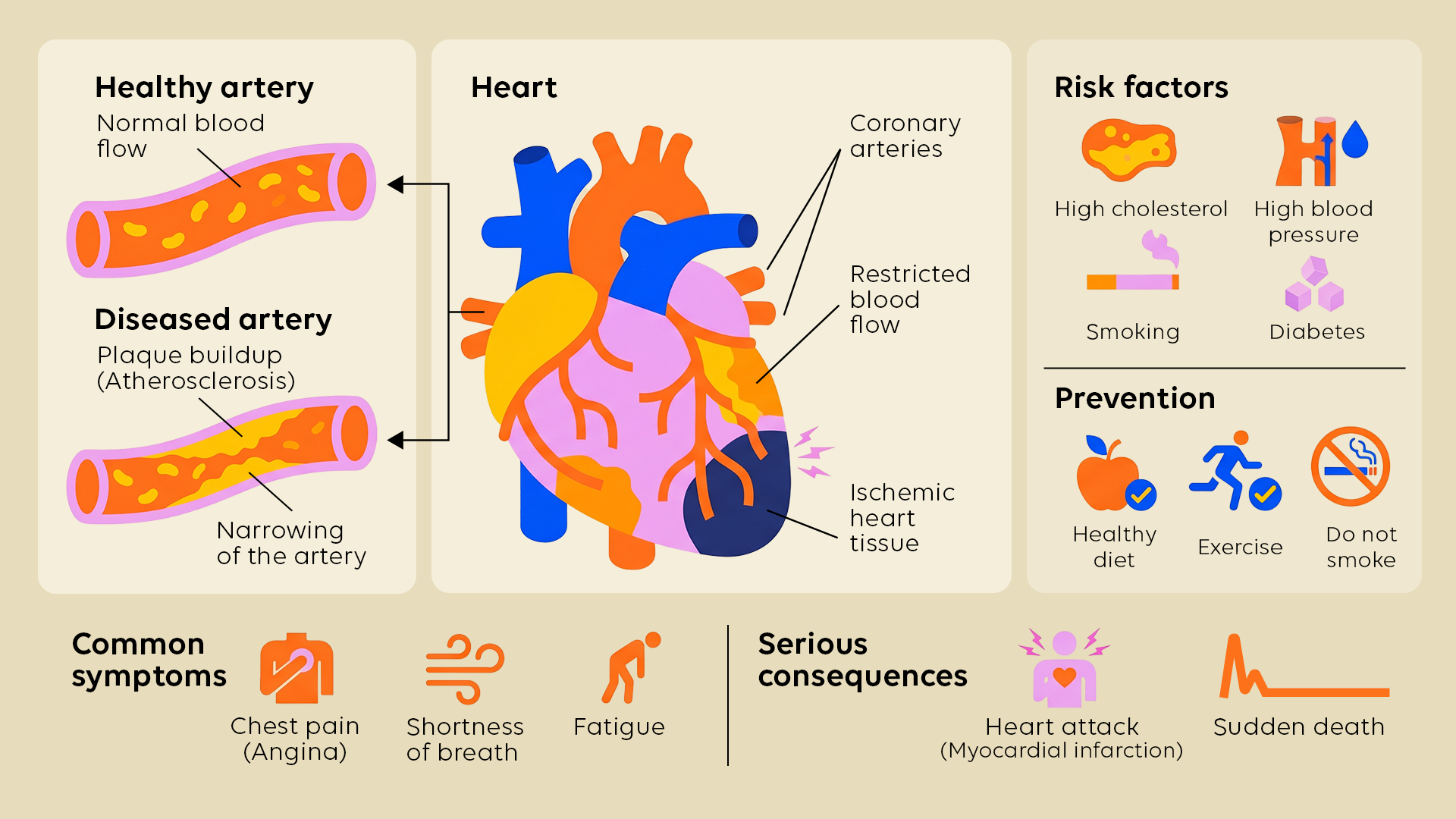
Coronary heart disease is a condition that occurs due to narrowing or blockage of the coronary arteries — the blood vessels that supply oxygen-rich blood to the heart muscle (myocardium).

In most cases, this constriction results from atherosclerosis, which involves the buildup of plaque comprised of fats, cholesterol and inflammatory cells in the artery walls. Over time, this plaque thickens and hardens, thus restricting blood flow.

When the heart is not receiving enough oxygen, this can lead to symptoms such as chest pain (angina). If the artery becomes suddenly and completely blocked, acute myocardial infarction may develop, a condition that requires emergency treatment.


Coronary heart disease: what are the types?

Coronary heart disease does not always appear in the same manner. Depending on the stability of the atherosclerotic plaques and the extent of arterial blockage, it may present different clinical forms.

Stable angina

Stable angina is chest pain or discomfort triggered by physical exertion or emotional stress, and it is relieved with rest or medication (nitrates).
In this case, the atherosclerotic plaques are relatively stable and restriction of the artery is predictable. Although this condition does not constitute an immediate emergency, it can progress, and therefore requires regular medical monitoring.

Unstable angina

Unstable angina is a more serious condition. Pain can occur at rest, be more severe and last longer than normal. It is often associated with atherosclerotic plaque rupture and the partial formation of a thrombus (blood clot), and may precede an acute myocardial infarction. This condition is considered a medical emergency.

Acute myocardial infarction

A heart attack (myocardial infarction) occurs when a coronary artery becomes completely and suddenly blocked, interrupting the oxygen supply to the heart muscle. Unless blood flow is restored quickly, heart muscle cells die (necrosis). Emergency treatment is critical to reduce complications and the risk of death.

Coronary heart disease: what are the symptoms?

Coronary heart disease can develop gradually or occur suddenly, depending on the extent of the arterial blockage and plaque stability. In some people, particularly in the early stages, CHD may not cause noticeable symptoms. We mention below some warning signs:

  • 1. Chest pain or discomfort (angina)

  • 2. Shortness of breath (dyspnoea)

  • 3. Excessive fatigue

  • 4. Nausea, sweating and dizziness

  • 5. Silent myocardial ischaemia

Coronary heart disease: causes and risk factors

Most cases of coronary heart disease result from the progressive development of atherosclerosis. This process is influenced by various factors. We list the main ones below:

Arterial hypertension

High blood pressure causes microscopic lesions in the artery walls, facilitating cholesterol buildup and the development of atherosclerotic plaque.

High cholesterol

High levels of LDL-cholesterol (known as “bad cholesterol”) lead to the formation of atherosclerotic plaque, thus restricting the coronary arteries.

Smoking

Smoking causes vascular inflammation, increases plaque buildup (with a greater tendency to form clots) and accelerates atherosclerosis.

Diabetes Mellitus

Chronic hypergylcaemia damages blood vessels and is associated with a greater risk of cardiovascular disease, often with no noticeable symptoms.

Sedentary lifestyle, overweight and poor diet

Factors such as a sedentary lifestyle, being overweight and maintaining a poor diet lead to metabolic changes that accelerate the development of coronary heart disease.

Age and genetic predisposition

The risk increases with age and is higher in people with a family history of early cardiovascular disease.

Coronary heart disease: diagnosis

A coronary heart disease diagnosis is based on a clinical assessment, an analysis of the risk factors and complementary exams. After taking a medical history and performing a physical exam, the physician may prescribe:
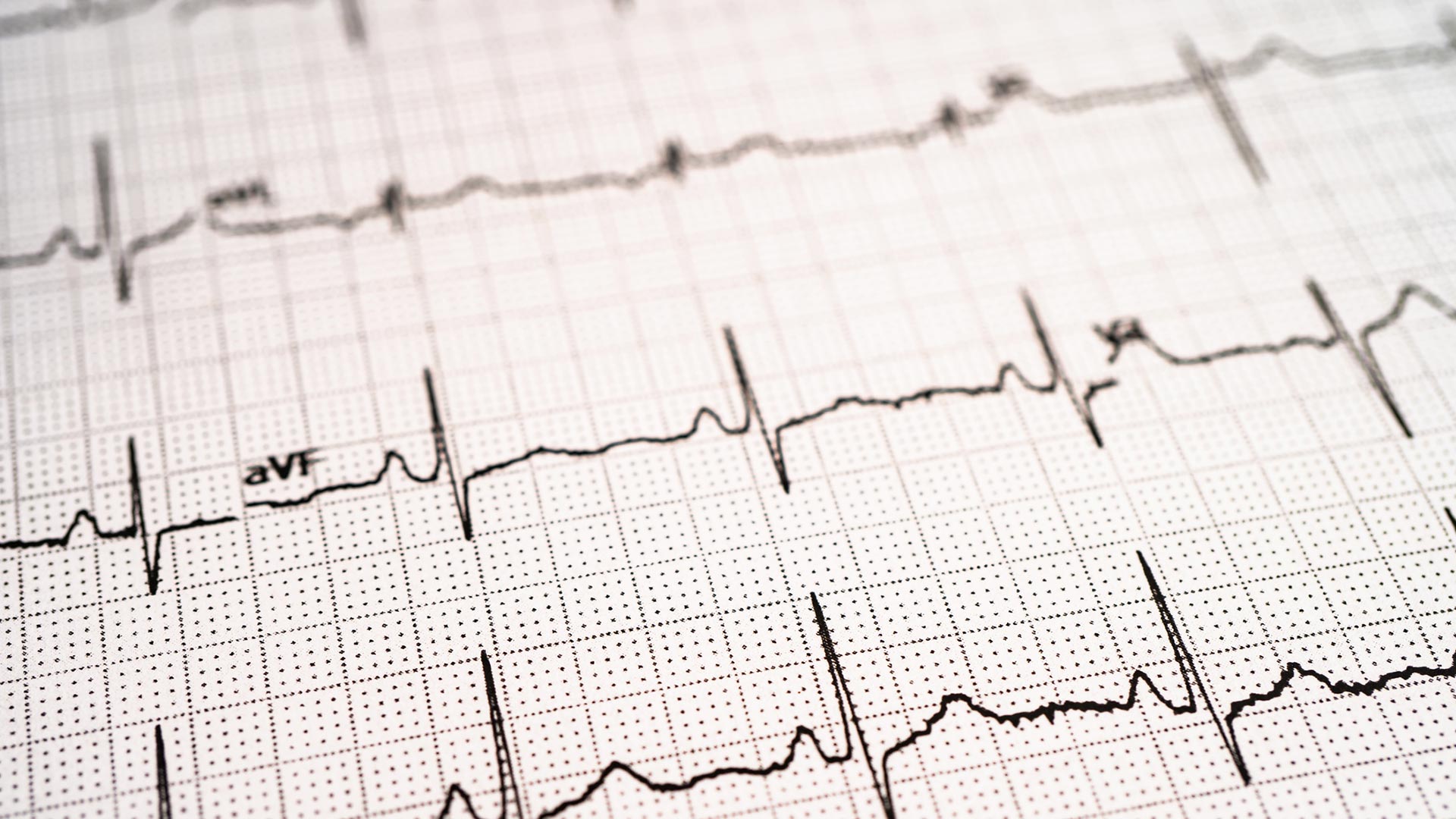
•    Electrocardiogram (ECG): assesses the heart’s electrical activity and can reveal signs of ischaemia (lack of oxygenation); 
•    Stress test: assesses the heart’s behaviour during physical exercise; 
•    Echocardiogram: analyses the heart’s structure and function; 
•    CT Coronary Angiogram: imaging exam that produces detailed images of the coronary arteries; 
•    Cardiac Catheterisation (coronary angiography): invasive exam that enables blockages to be precisely identified and, in many cases, treated during the same procedure. 

Coronary heart disease vs. heart attack: what’s the difference?

Although the terms are often used interchangeably, coronary heart disease and heart attack are not the same thing. This distinction is important to understand the progression of the disease and the level of emergency in certain clinical situations.

Coronary heart disease

Coronary heart disease is the gradual restriction of the coronary arteries due to atherosclerosis — the buildup of fat deposits (plaque) and inflammation of the artery walls.

This process develops over several years and can remain silent, causing stable angina (chest pain triggered by exertion) and may progress to more serious conditions, such as unstable angina. 

Therefore, this is a chronic disease that can be controlled and stabilised with medication and lifestyle changes.

Acute myocardial infarction (heart attack)

Acute myocardial infarction occurs when a coronary artery becomes suddenly blocked, usually due to ruptured atherosclerotic plaque and the formation of a thrombus (clot).

This obstruction blocks the oxygen supply to the heart muscle. If the flow is not quickly restored, heart cells begin to die (necrosis).

Unlike coronary heart disease, a heart attack is a medical emergency that requires immediate treatment, normally through an emergency angioplasty to reopen the artery.


Coronary heart disease: treatment

The treatment for coronary heart disease aims to relieve symptoms, improve quality of life and reduce the risk of heart attack and cardiovascular-related death. We list below some therapeutic approaches:

Pharmacological treatment 

This therapy includes drugs that act on different mechanisms:

•    Antiplatelet drugs, which reduce the risk of blood clots; 
•    Statins, which lower LDL cholesterol and stabilise plaque; 
•    Betablockers and calcium channel blockers, which reduce the strain on the heart; 
•    Nitrates, used to relieve angina. 

Percutaneous coronary intervention (angioplasty)

Involves dilating the blocked artery with a balloon and placing a stent (small metallic implant) to keep the artery open. This is often performed in cases of heart attack or severe angina.

Coronary bypass surgery

Indicated in cases of extensive CHD or multiple blockages. This surgery creates a “bypass” to reroute blood around the blocked sections of the arteries, in order to restore adequate oxygen supply to the heart muscle.

This therapeutic decision is always made on an individual basis, taking into account the severity of the disease, the symptoms and the patient’s medical condition.

Coronary heart disease: what are the precautions?

Once the coronary heart disease diagnosis is confirmed, it is critical to take strict measures to control the progression of the disease and reduce the risk of future cardiovascular events.

  • 1. Control risk factors

  • 2. Follow the treatment plan

  • 3. Maintain a healthy diet

  • 4. Regular and supervised physical exercise

  • 5. Quit smoking

Coronary heart disease: how to prevent it?

Although not all cases can be prevented, adopting preventive measures can substantially reduce the risk of developing coronary heart disease:

•    Not smoking; 
•    Controlling blood pressure; 
•    Maintaining adequate cholesterol levels; 
•    Controlling diabetes;
•    Exercising regularly; 
•    Maintaining a healthy weight; 
•    Attending regular medical check-ups, especially in the event of risk factors.

Coronary heart disease: frequently asked questions

We answer below some frequently asked questions about coronary heart disease. 

  • 1. How to tell the difference between anxiety-related chest pain and a heart attack?

  • 2. What should I do and have at home for a cardiac emergency?

  • 3. Can people with coronary heart disease exercise?

Coronary heart disease: take care of your cardiovascular health with Joaquim Chaves Saúde

Coronary heart disease can develop silently, but an early diagnosis and strict control of risk factors can substantially reduce the risk of heart attack and other cardiovascular complications. 

Joaquim Chaves Saúde features specialist teams and advanced diagnostic measures to assess and monitor coronary heart disease. If you present risk factors or experience any suspicious symptoms, schedule your consultation and receive personalised and specialised cardiovascular care.

Clinical Team

We have a team of doctors and health professionals, specialists in various areas, available to give you the support you need.

Daniel Ferreira
Medic-coordinator
Daniel Ferreira
Speciality/Service
Cardiology
Key areas of expertise
Clinical Cardiology, Echocardiography, Cardiac Intensive Care, Cardiopulmonary Resuscitation, Pulmonary Thromboembolism, Thrombosis and Platelets, Digital Health
Healthcare Units
Clínica de Sintra, Clínica Cirúrgica de Carcavelos, Clínica de Miraflores
Pedro Bico
Medic
Pedro Bico
Speciality/Service
Cardiology
Key areas of expertise
Cardiac Intensive Care, Clinical Cardiology, Cardiac Imaging
Healthcare Units
Clínica Cirúrgica de Carcavelos
Joaquim Carranca
Medic
Joaquim Carranca
Speciality/Service
Cardiology
Key areas of expertise
Cardiology consultations and non-invasive diagnostic tests
Healthcare Units
Clínica de Cascais
Gonçalo Proença
Medic
Gonçalo Proença
Speciality/Service
Cardiology
Key areas of expertise
Angina pectoris, Myocardial infarction, Hypertension, Heart failure and cardiovascular risk
Healthcare Units
Clínica Cirúrgica de Carcavelos, Clínica de Miraflores, Clínica de Cascais

Cardiology

Get to know this area of health and find the right care for you.

Book Appointment and Exam

Book an appointment or an exam to receive the best medical care.
Share