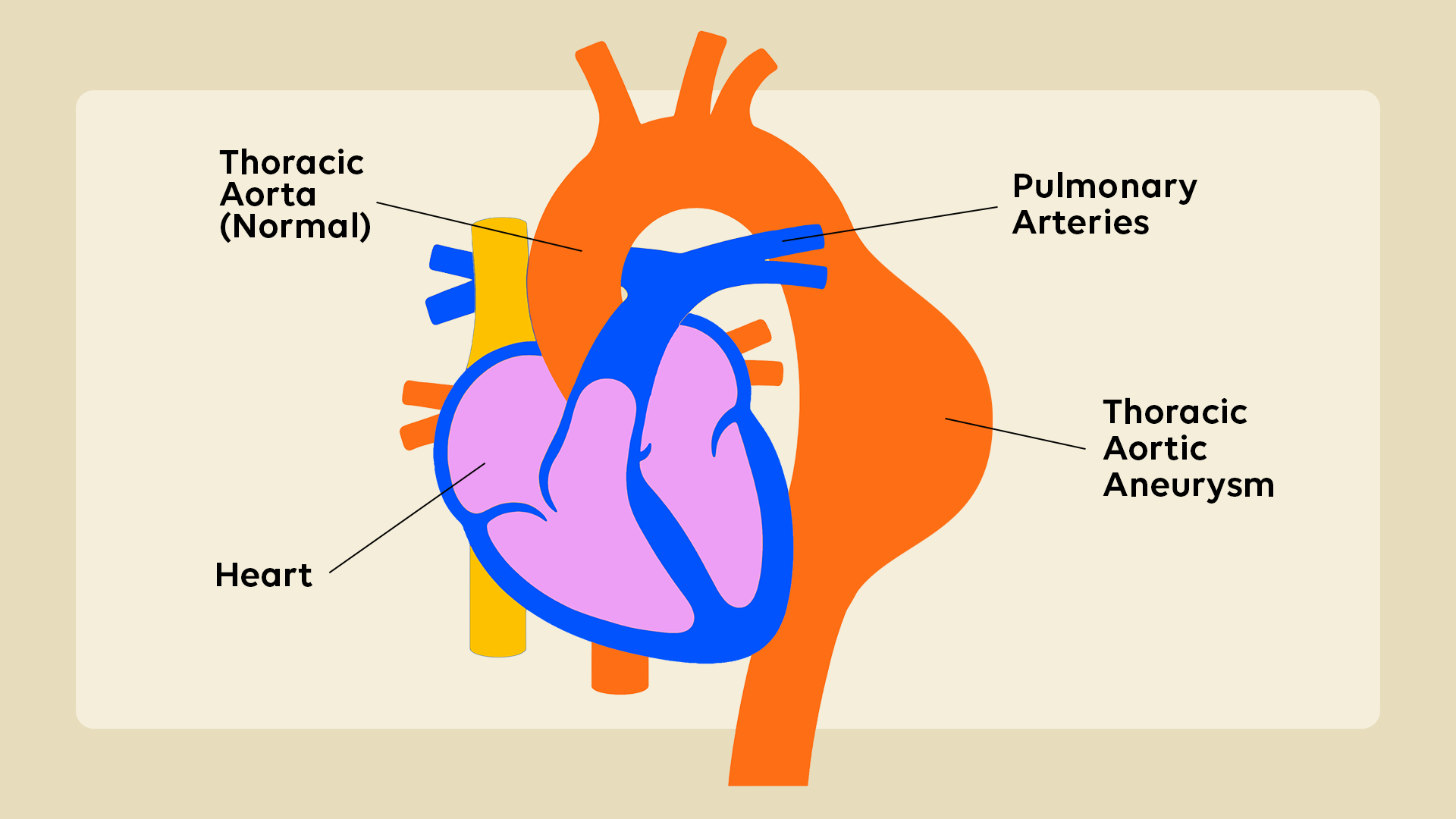
An aortic aneurysm is a vascular condition that can develop silently for years. Although often it does not cause symptoms in the early stages, its gradual growth may increase the risk of rupture – a serious and potentially fatal situation.
Understanding what an aneurysm is, recognising the warning signs and knowing when to seek a medical assessment is essential to guarantee the right care.
Aortic Aneurysm: what is it?
An aortic aneurysm occurs when there is an abnormal bulge in the wall of the aorta, the main artery in our body that carries blood from the heart to all our organs.
Simply put, an aneurysm happens when the artery weakens and becomes progressively dilated. When the diameter exceeds a certain size, the risk of rupture increases.
An aneurysm can appear in different parts of the aorta. One of these areas is the thoracic aorta, which is located in the chest and includes the ascending aorta (the upper portion of the artery, which emerges directly from the heart) and the aortic arch, where the artery curves before extending to the descending aorta towards the rest of the body. Another area where an aneurysm can occur is the abdominal aorta, located in the abdomen; this is the most common type of aneurysm.